

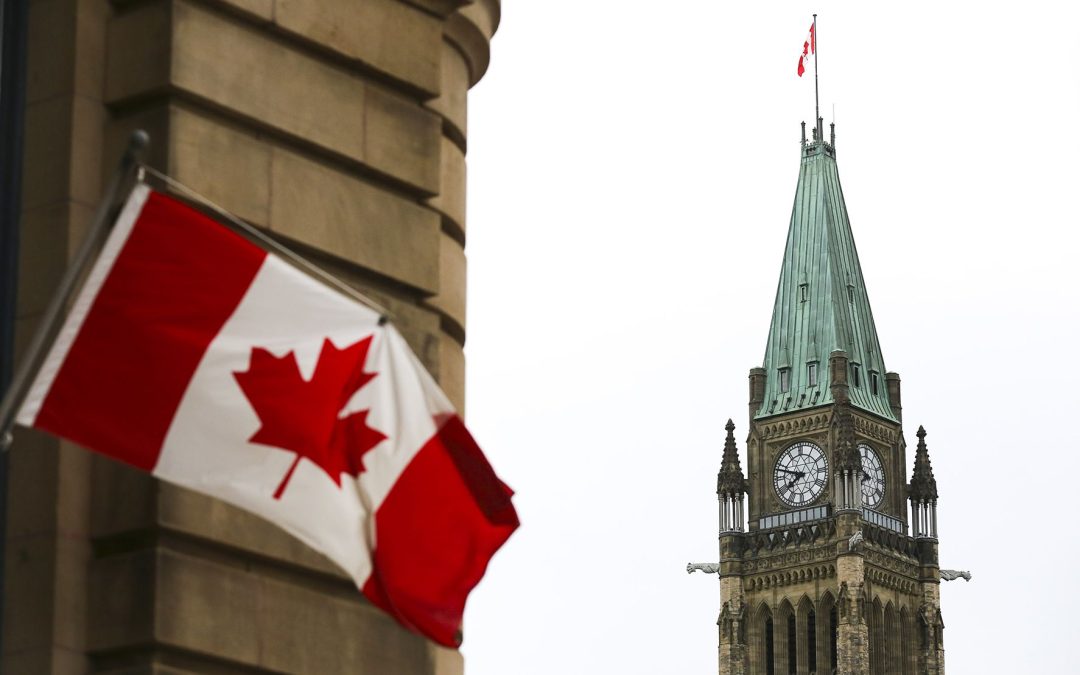
We may all have different levels of patriotism, but this isn’t the time to let that flag. As in become tired and less enthusiastic. That definition of flag emerged from the idea of a physical flag that flaps about loosely and hangs down.
I’ve been thinking about both types of flag lately.
It’s vital not to weaken when you’re threatened. Canada has been. Not the first time, won’t be the last.
But the other reason I’ve reflected on our banner is that February 15 is National Flag of Canada Day. And this year’s marks 60 years to the day since our red and white maple leaf flag was raised for the first time on Parliament Hill in Ottawa.
Countries aren’t companies to be bought and sold. (Yes, I know that much of world history disproves that.) Our national anthem isn’t a jingle and our flag isn’t a logo on a product. What it does symbolize is a sovereign nation.
We didn’t have our current flag until 1965. The year before, Prime Minister Lester Pearson created a parliamentary committee to select a national flag before Canada’s centennial year of 1967.
Prior to that, the Canadian Red Ensign was the de facto national flag (it was never formally adopted as such), featuring a Union Jack and a coat of arms.
From the three shortlisted finalists, we ended up with a stylized maple leaf in a white square, equal in space to the two red bars on either side. In the original design, the leaf had 13 points. It was harder to recognize at a distance, so that was changed to 11 points.
The Government of Canada reports that vexillologists (fancy term for flag experts) often cite our flag as one of the world’s most beautiful “based on its compelling design and measured use of colour”.
The Canadian flag has been to the highest of heights. Canadian climbers have taken it to the summit of Mount Everest, and Canadian astronaut Chris Hadfield displayed it on board the International Space Station.
When lowered, the flag is also part of national mourning, and not just for certain named individuals. It’s flown at half-mast each Nov. 11 for Remembrance Day, on Dec. 6 for National Day of Remembrance and Action on Violence Against Women, and on Sept. 30 for National Day for Truth and Reconciliation. The longest half-masting lasted 162 days (May 30 to Nov. 7, 2021) following the identification of unmarked graves at a former residential school in Kamloops, B.C.
We’re an imperfect country, like all are, some more than others. But last I checked, it’s our country. So let’s celebrate National Flag of Canada Day. And remember, the Government of Canada says the flag should never be used as a decoration or draping, a table or seat cover, apparel or a cape.
The flag also should never be flown upside down, except as a signal of distress. Do these days count?
Stuart Foxman is a Toronto-based freelance writer, who helps clients’ products, services, ideas and organizations to come alive. Connect with me here on LinkedIn, or check me out at foxmancommunications.com where I share these blogs too. More original posts coming regularly about communications, information, motivation, writing, branding, creativity, media, marketing, persuasion, messages, learning, etc.
February 12, 2025