

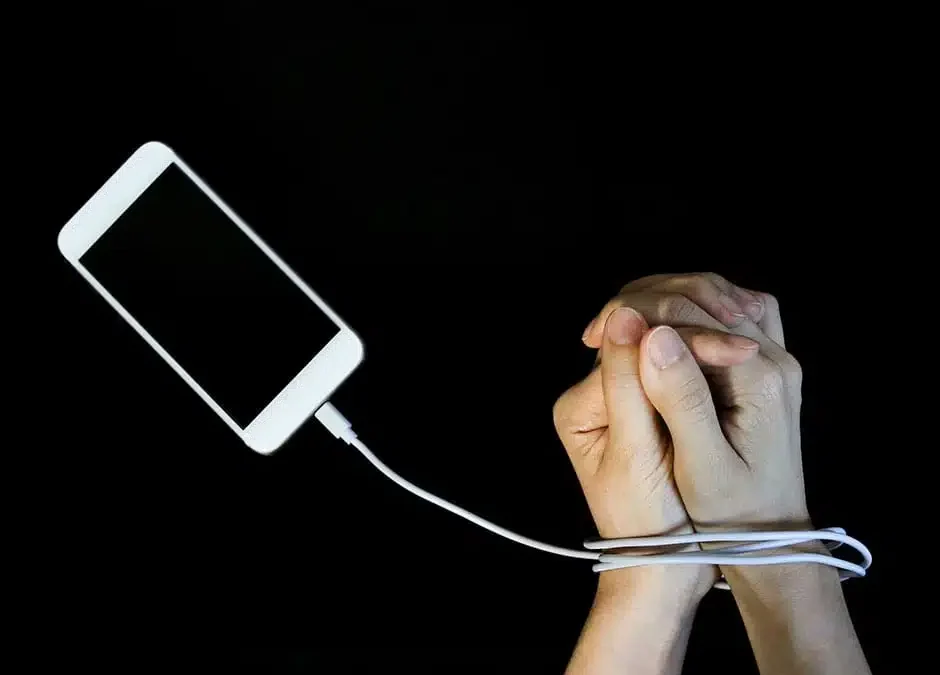
In the smartphone age, we’re all living through a real-time experiment – and we’re the test subjects.
The tech companies and app designers are Pavlov, and the rest of us are the drooling dogs in an endless cue-craving-response-reward loop.
You know the famous classical conditioning experiment. In the late 1890s, Ivan Pavlov, a Russian neurologist and physiologist, was studying digestion. He rang a bell when the dogs’ food arrived, and soon they learned to salivate at the ding alone.
We’re not so different. Our bell is every notification ping, buzz, phone vibration or glowing screen, and our food is a big bowl of dopamine. It’s the temporary rush or validation we get each time we check our phones, with their endless stream of messages, group chats, likes and news alerts.
And we’re always hungry for more.
Reach, refresh, repeat
Pavlov demonstrated how conditioning changes behaviour. New research is showing that compulsive smartphone use goes further by rewiring our brains.
This isn’t even just about content. Sure, our feeds can be unhealthy. Much of it is like junk food for the brain – bite-sized fluff that’s instantly gratifying but has no nutritional value. At worst, repeated exposure to echo chambers and a firehose of disinformation can distort worldviews.
While what we consume might be damaging, how we consume it is the conditioning. Reach, refresh, repeat. The ritual itself becomes the reward, and has its risks too.
Research backs it up. For one study, published in the journal Translational Psychiatry, researchers put what they called “problematic smartphone users” through an MRI. Compared to a control group, the subject group showed less focus and impaired performance when doing simple tasks.
Additional findings suggests that excessive smartphone use can train our reward system to crave digital content – to such a degree that it’s akin to other addiction-like responses like gambling and substance use.
The grip of dependence
That physical and psychological dependence is evident in our routines. Surveys have found that we grab our smartphones at least 60 to 350 times a day. For some, it’s more.
Out of curiosity, I checked my habits (on an iPhone, go to settings, look under screen time, and find pickups). Over the last week, my low was 49 and my high was 106.
A study once revealed that between all the taps, swipes, clicks and keystrokes, we touch our phones an average of 2,617 times a day. We think we’re holding our phones, but really they have a firm grip on us.
In one experiment, students were asked to read while attached to heart rate and sweat monitors. Their phones were out of reach yet visible. As researchers bombarded the phones with incoming texts, the students’ anxiety skyrocketed and their reading comprehension sank.
Could you handle a digital detox?
Impacts like that underscore the need to loosen our digital tether. Some consumers are turning to “dumbphones” with limited functionality. In a recent article about the growth of this niche, Kaiwei Tang, co-founder of the Light Phone, described his ideal user experience. “I want to make it boring.”
With its black-and-white, text-based display, and no social media or third-party apps, the Light Phone is, in the company’s words, “designed to be used as little as possible”.
Tang isn’t anti-technology, but says his phone is a reaction to the attention economy. As he told one reporter, “Every free app, every social media platform, every browser, is trying to maximize engagement so they can make money collecting data and categorizing people into different groups so they can sell it to advertisers.”
While minimalist devices are one solution, some people are opting for digital detoxes. A movementcalled Appstinence is all about decreasing access to apps, then deactivating and deleting, all on the way to departing.
Rebooting our brains is possible
It’s not easy to do. But even a brief break can reverse the negative effects.
This summer, a study in Computers in Human Behavior reported on what happened when 25 young adults were asked to restrict their smartphone use for 72 hours (except for work and essential communications).
MRI scans and other before-and-after psychological tests looked at the impact on neural patterns and activity. It turns out that limiting or taking away smartphone use helps to reset key brain networks involved in focus and reward.
That’s welcome. Last year, the Oxford dictionary named “brain rot” as their word of the year. They defined it as the deterioration of your mental or intellectual state, especially due to the overconsumption of trivial online content.
The journal Brain Sciences followed that up by publishing a literature review showing what brain rot leads to or is associated with:
- emotional desensitization;
- cognitive overload;
- a negative self-concept;
- psychological distress;
- anxiety; and
- depression.
The phone isn’t generating the stream of what we take in, but it has become the perfect delivery system – the syringe for a toxic supply of low-value or manipulative content.
It keeps a leash on our attention 24/7, and we willingly clip it on. Pavlov’s dogs couldn’t shake their response. Can we?
Like many people, I haven’t been able to limit my own smartphone use. But it’s encouraging to know that doing so can us get closer to our default settings. Before the portable dopamine dispensers remapped our brains.
Stuart Foxman is a Toronto-based freelance writer, who helps clients’ products, services, ideas and organizations to come alive. Connect with me here on LinkedIn, check me out at foxmancommunications.com or follow me on X (formerly Twitter) @StuartFoxman where I share these blogs too. More original posts coming regularly about communications, information, motivation, writing, branding, creativity, media, marketing, persuasion, messages, learning, etc.
Oct. 1, 2025